

In the world of construction, maintenance, and warehousing, tight and confined spaces are a common challenge. Operating mobile elevating work platforms (MEWPs) in these environments requires precision, careful planning, and the right equipment. Whether you’re working in a narrow warehouse aisle, a cramped urban construction site, or a space filled with obstacles, these tips will help ensure safety, efficiency, and successful operation.
#1 - Choose the right equipment for the job
The first step in navigating tight spaces is selecting a MEWP designed for confined areas.
# Opt for compact models
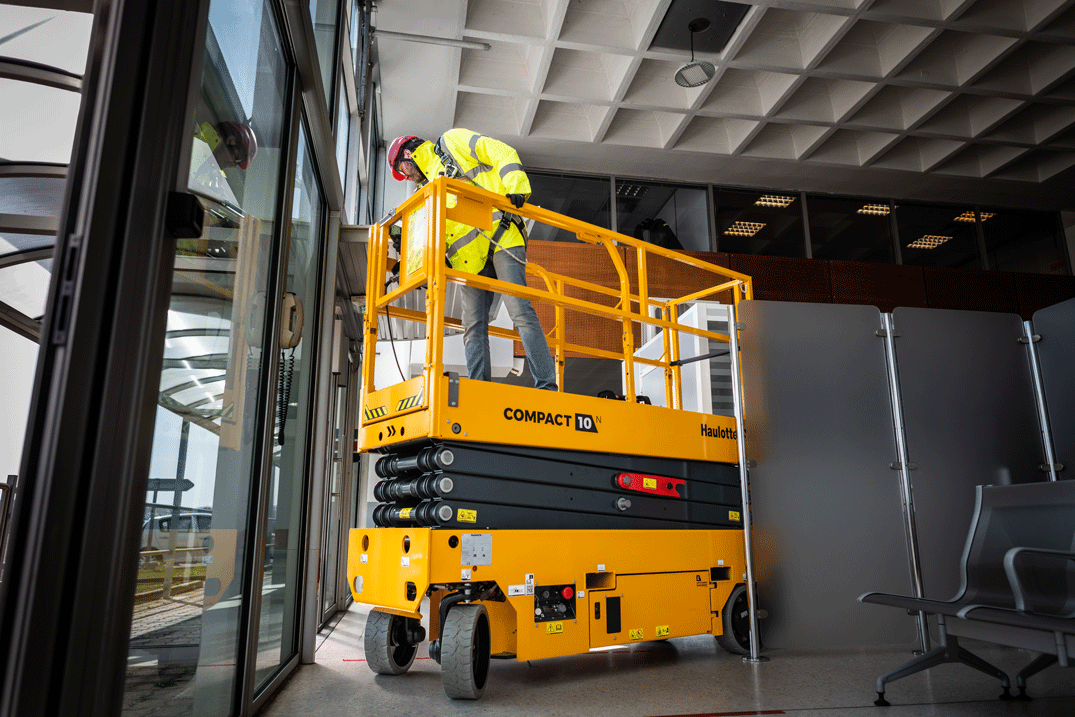
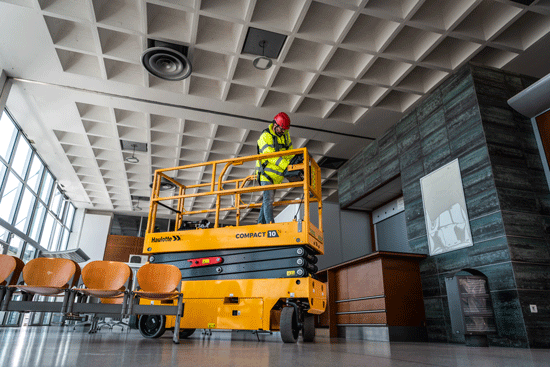
Compact scissor lifts or mast lifts are excellent choices for tight spaces. Their smaller footprints make them easier to maneuver in restricted areas. On Haulotte’s COMPACT range you can fold the guardrails to pass through low doors. This is a convenient feature for indoor sites with specific applications.
# Consider articulating boom lifts
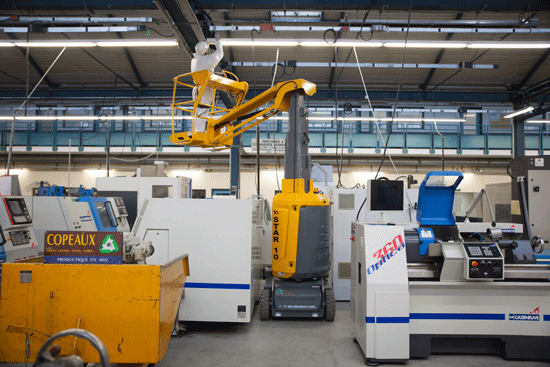
For spaces with overhead obstacles, an articulating boom lift provides greater flexibility to reach around objects.
# Electric-powered MEWPs for indoor use
Ensure your MEWP is suitable for indoor use if necessary, considering factors like emissions and noise levels. Electric MEWPs are quieter and emit no fumes, making them ideal for indoor and enclosed environments.
👉 Discover the benefits of electric vs. diesel MEWPs.
# Check the turning radius
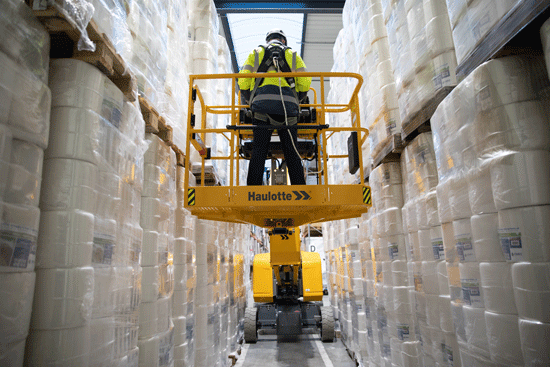
Evaluate the MEWP’s turning radius to ensure it can navigate corners and narrow aisles with ease.
# Zero tailswing
Zero tailswing models are ideal for working near walls or obstacles, as they minimize the risk of accidental damage.
For spaces with overhead obstacles, an articulating boom lift provides greater flexibility to reach around objects.
# Electric-powered MEWPs for indoor use
Ensure your MEWP is suitable for indoor use if necessary, considering factors like emissions and noise levels. Electric MEWPs are quieter and emit no fumes, making them ideal for indoor and enclosed environments.
👉 Discover the benefits of electric vs. diesel MEWPs.
# Check the turning radius
Evaluate the MEWP’s turning radius to ensure it can navigate corners and narrow aisles with ease.
# Zero tailswing
Zero tailswing models are ideal for working near walls or obstacles, as they minimize the risk of accidental damage.
# Proportional movements
Smooth, proportional controls ensure safe and precise maneuvering at height. For added safety, driving speed automatically adjusts during turns and on slopes.
#2 - Develop a safe work plan
Operating MEWPs in confined spaces demands meticulous planning to ensure safety and efficiency:
# Maintain optimal machine condition
# Maintain optimal machine condition
- Regular inspections: Conduct regular inspections to identify and address potential issues.
- Proper maintenance: Keep the MEWP well-maintained for optimal performance and safety.
- Load capacity: Never exceed the MEWP’s rated load capacity
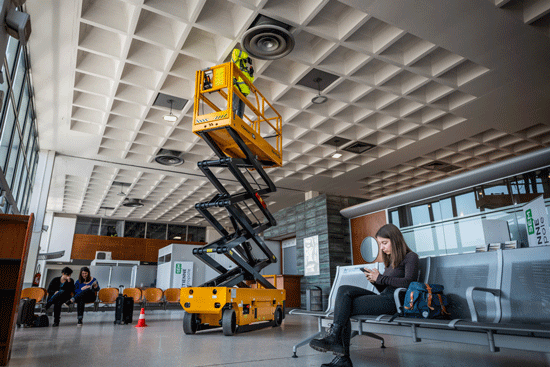
# Establish safe operating procedures
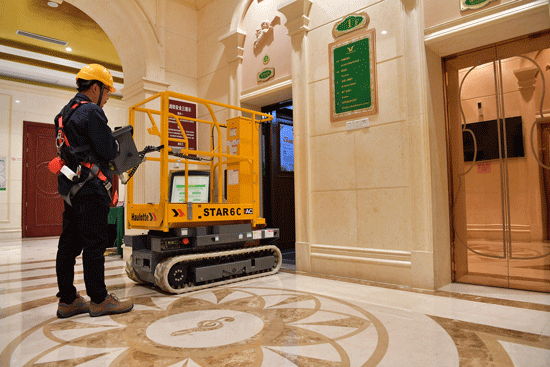
- Identify site access: Especially for indoor work, ensure the MEWP can pass through narrow doorways or confined entry points.
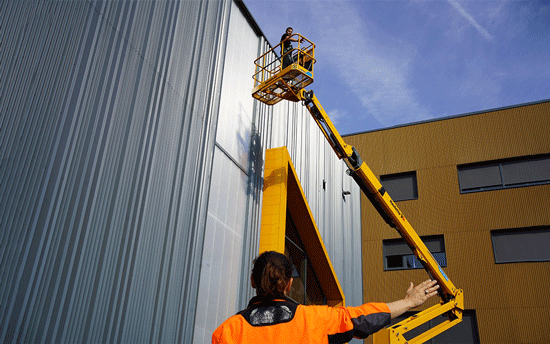
- Communicate clearly: Use hand signals, radios, or other communication tools to stay in sync with the ground crew.
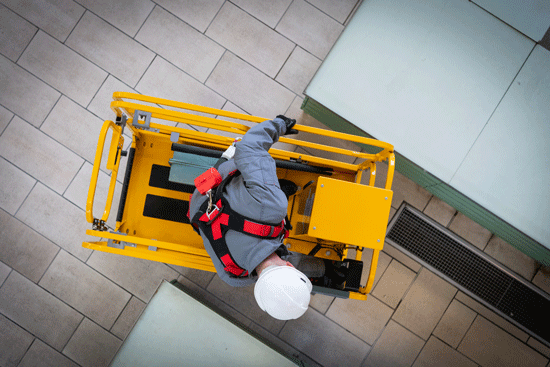
- Use fall protection: Always wear proper fall protection gear, particularly in confined spaces with additional hazards.
- Monitor hazardous environments: If working in poorly ventilated areas, ensure the MEWP is safe to use and follow appropriate guidelines.
# Conduct a risk assessment
- Measure the space to ensure the MEWP dimensions allow for safe maneuverability, even at full height.
- Identify obstacles such as overhead pipes, beams, or other structures.
- Assessing ground conditions to verify the floor can support the weight of the equipment and its load.
# Plan for emergencies
- Keep egress routes clear: Ensure clear paths for quick exits in case of emergencies.
- Train operators on emergency procedures: Include protocols like manually lowering the platform if power fails.
#3 - Master precision maneuvering
# Operating MEWPs in confined areas requires skill and attention to detail:
- Use spotters: A second set of eyes helps operators navigate blind spots and avoid obstacles
- Take advantage of controls: Modern MEWPs are equipped with precise joystick controls, allowing incremental adjustments for exact positioning.
- Move slowly: Operating at a slower pace ensures greater control and reduces the risk of accidental collisions.
- Practice beforehand: Whenever possible, practice maneuvering in an open area to familiarize yourself with the MEWP’s responsiveness.
#4 - Optimize productivity in tight spaces
# Efficiency is crucial in areas with limited room to maneuver:
- Organize tools and materials: Pre-load the platform with everything needed for the task to minimize unnecessary trips.
- Plan the sequence of work: Work methodically from one area to the next, avoiding frequent repositioning.
- Schedule downtime strategically: Coordinate with other teams to ensure uninterrupted access to the confined space.
Operating MEWPs in confined areas doesn’t have to be daunting. With the right equipment, thorough planning, and a focus on safety, even the tightest spaces can be navigated efficiently and effectively. By following these tips, you can minimize the risk of accidents and maximize productivity when working in confined spaces. Always prioritize safety and adhere to local regulations and industry best practices.